Resilience
Why Failure Deserves a Place in Childhood
There's a strong pull, as a parent, to catch mistakes before they land — the forgotten permission slip driven to school at the last minute, the argument with a friend smoothed over before feelings really get hurt, the low grade explained away before the child has to sit with it.
Each of those rescues feels caring in the moment, and often is. But a childhood with no room for failure to actually happen is a childhood with very little practice at recovering from it — and recovery is a skill, not an instinct.
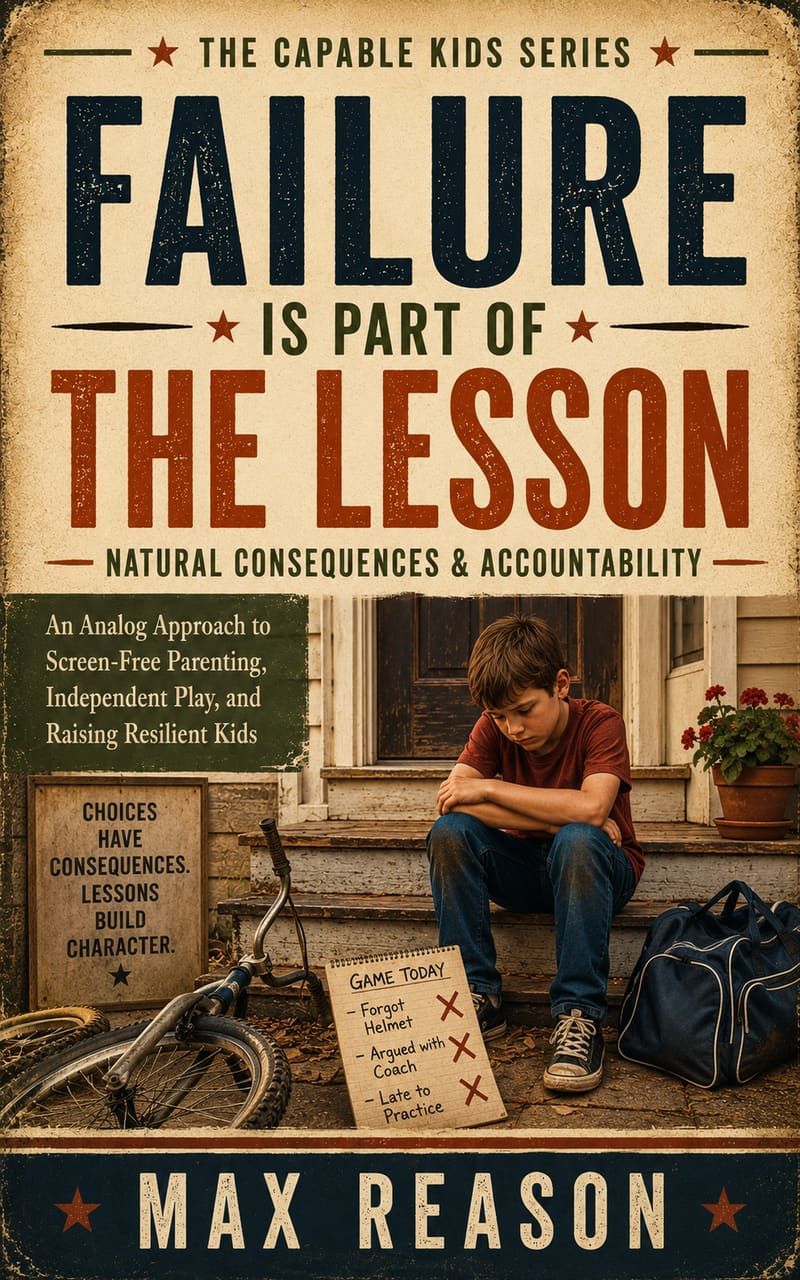
Failure, treated the right way, isn't evidence that something has gone wrong with a child. It's information: here's what didn't work, here's what happened as a result, here's what could be different next time. That process only teaches anything if the consequence is allowed to actually occur.
The parent's job in that moment isn't to prevent the failure or to pretend it doesn't matter. It's to stay present while the child feels the disappointment, and then help them look at it honestly — what happened, what they'd do differently, and what they're going to do next.
A child who's never failed at anything meaningful tends to be more afraid of trying, not less. A child who has failed, recovered, and tried again usually isn't afraid of much at all.