Screen-Free Childhood
Why Boredom Is Good for Kids
Most parents feel a small alarm bell go off the moment a child says, "I'm bored." It feels like a problem to solve, and solving it quickly — a show, a game, a planned activity — is usually the fastest way to make the discomfort go away.
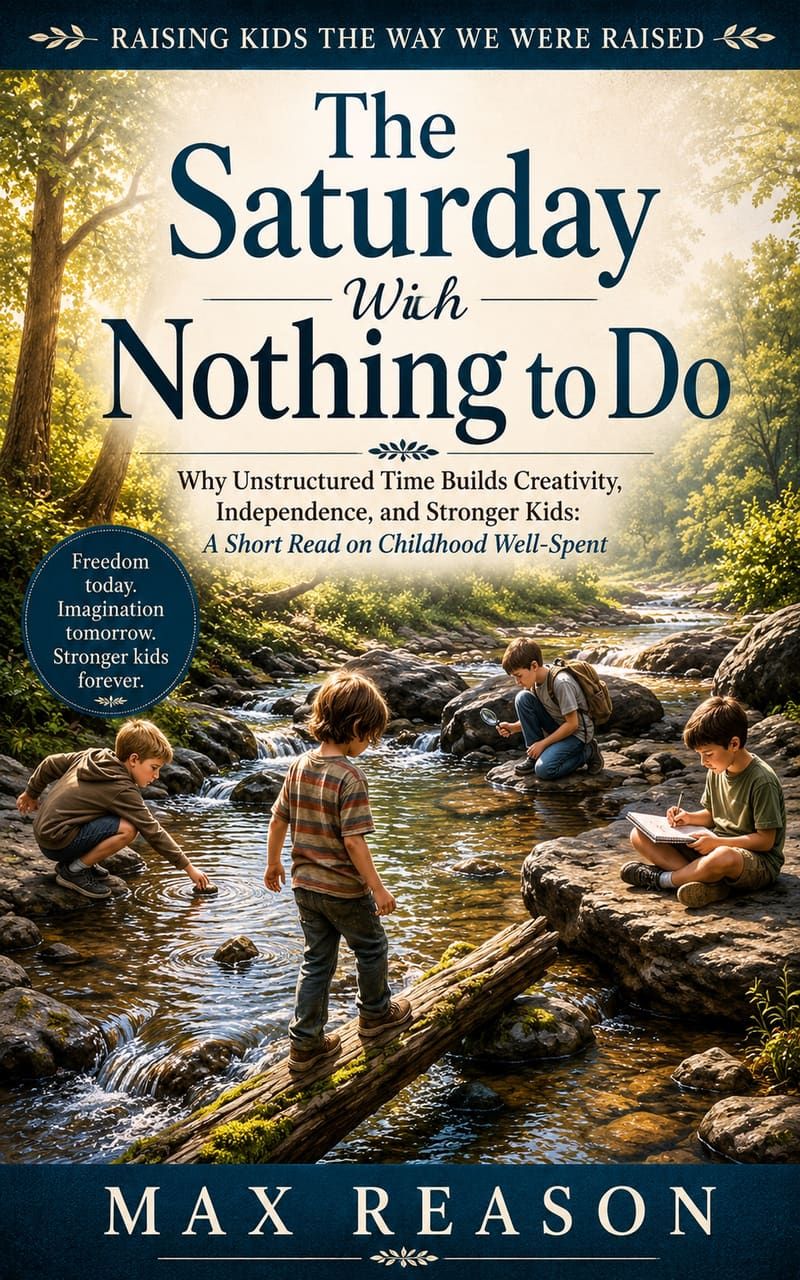
But boredom isn't actually a malfunction. It's a gap, and children are very good at filling gaps when they're given the time and the trust to do it. A shoebox becomes a garage for toy cars. A blanket becomes a fort. An empty afternoon becomes a plan nobody assigned.
None of that happens if the gap gets filled for them every time. Constant entertainment teaches a child that boredom is something an adult — or a screen — is supposed to fix. Unstructured time teaches a child that boredom is something they can fix themselves.
This doesn't mean every bored moment needs to turn into a lesson, or that parents should refuse to engage with their kids. It means resisting the urge to solve boredom immediately, and giving it a little room to become something else first.
Start small. Let one afternoon a week stay open, with no plan and no screen offered as the default fallback. It will feel uncomfortable before it feels productive — for the child and for you. That discomfort is usually the point.